
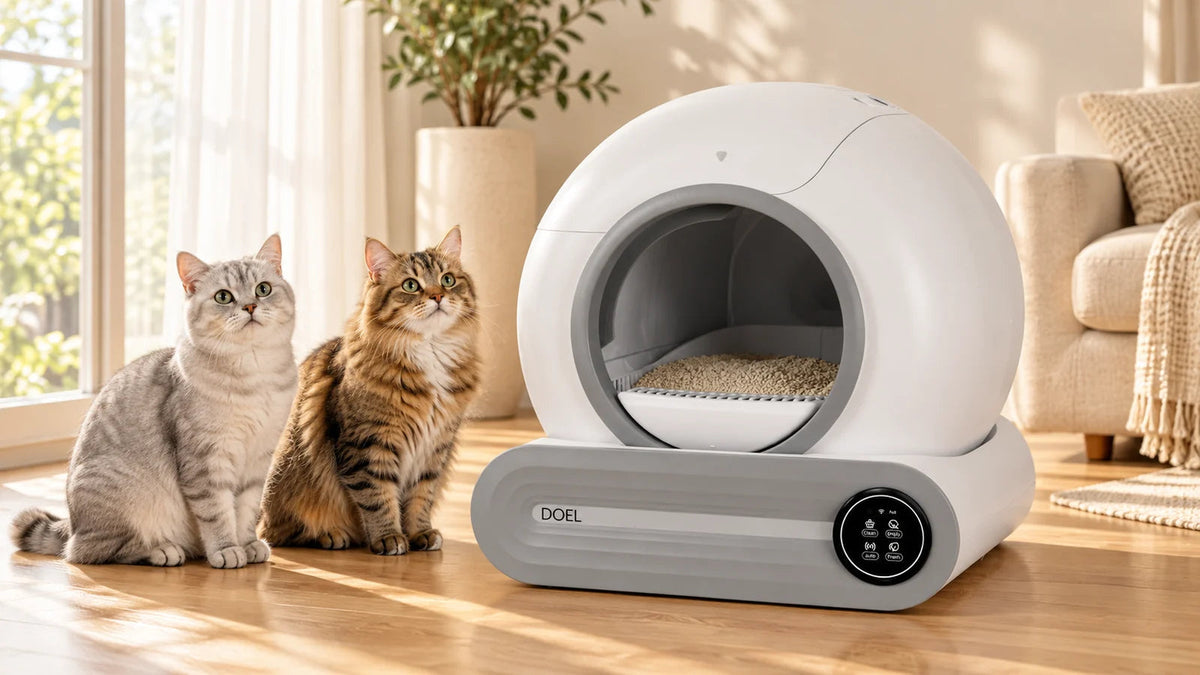
A self-cleaning litter box contains moving parts, so suitability depends on the exact machine, your cat and how the unit is used. A feature list or a high price cannot establish that a particular box is safe for every cat.
Start with the manual: confirm your cat meets every stated age and weight requirement, understand the stop controls, and follow the manufacturer's setup and inspection instructions. Keep an accessible manual tray available while your cat adjusts.
Check the exact model before buying
Ask for the manual for the version being sold. Similar-looking machines can have different openings, mechanisms, controls and operating limits. Product photos alone will not show how a unit responds when a cat approaches during a cycle.
| Check | What you need to establish |
|---|---|
| Cat suitability | Minimum age, minimum and maximum weight, and space to move normally |
| Detection and stopping | The documented detection system, interruption behavior and accessible stop control |
| Moving parts | Correct assembly, covers and the manufacturer's instructions for avoiding pinch points |
| Maintenance | How to clean sensors, inspect parts and recognize an error |
| Support | A usable manual, contact details, replacement parts and the actual warranty terms |
Do not treat a sensor count as a universal safety score. Nor should electrical or materials markings be presented as proof that no cat can be injured. Check what a document covers rather than relying on a row of logos.
Kittens and small cats need model-specific limits
There is no single minimum weight or age that applies to every automatic litter box. A kitten may meet a weight threshold but still fail an age restriction, or may have access to a machine intended for another cat in the home.
Read both requirements. If either is unclear, ask the manufacturer before enabling automatic operation. A conventional tray is the straightforward option while suitability is unresolved. In a mixed-age household, consider every cat that can reach the unit, not only the cat for whom you bought it.
Size also matters at the other end of the range. A cat below the listed maximum weight may still find an enclosed chamber too cramped. Entry access, turning space and posture are separate checks.
Set it up without improvising
Use the specified surface, power supply, clearances and litter level. A level, stable installation and correctly fitted parts matter to the operation described in the manual. Keep cables protected and leave the entrance easy to approach and exit.
Never bypass sensors, hold a stop switch down or modify the entry to force the machine to run. Do not invent obstruction tests with a cat, hand or household object; use only a testing procedure explicitly described for that model. Stop using a unit that behaves unexpectedly and contact support.
Introduce the box at your cat's pace
Let your cat investigate the stationary box before introducing movement, using the manufacturer's recommended transition mode. Keep the familiar tray available. Avoid forcing the cat inside, taking away its only acceptable toilet or running a cycle while it is investigating the entrance.
Notice avoidance, hesitation, waiting for another cat to leave or a change in toileting location. The ASPCA's litter-box guidance discusses returning to a traditional box if a cat begins avoiding a self-cleaning unit. Automation is useful only when the cat is comfortable using the arrangement.
What daily care still involves
Check the litter surface and waste compartment, confirm the unit has returned to its normal position, and look for error messages or damaged parts. Follow the manual for sensor cleaning and component removal. Unplug as directed before maintenance, and keep water away from the electrical base.
Activity logs can help you describe changes, but they do not diagnose illness or prove that a cat is well. Contact a veterinarian about changes in toileting, discomfort or avoidance rather than waiting for an app alert.
Comparing the current DOEL models
The current DOEL Ti Pro product page lists automatic, timed and manual cleaning modes, app and touch controls, and activity records. The DOEL Ti+ page lists app-controlled cleaning and removable components. Read the current manual and suitability limits for the selected version; this guide does not claim that either uses infrared radar or establish a comparative safety ranking.
Frequently asked questions
Is a self-cleaning litter box safe for every adult cat?
No universal assurance is possible. Confirm the model's limits, physical fit, documented operation and your cat's acceptance. A manual tray may be the more suitable choice for an individual cat.
Can a kitten use the same automatic box as an older cat?
Only if the manufacturer permits that kitten's age and weight and all other conditions are met. Otherwise prevent access to automatic operation and provide a suitable manual tray.
Does app monitoring replace watching my cat?
No. Check the box and the cat directly. Logs are supporting observations, not a medical assessment or a substitute for regular care.